Ear acupuncture (Auriculotherapy), Laser therapy, Laser acupuncture
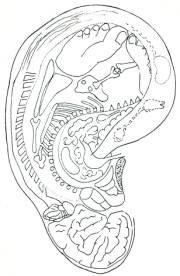
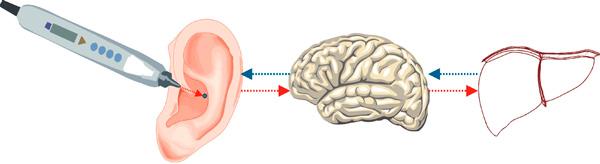
Ear acupuncture (auriculotherapy or auriculomedicine) is a form of reflex zone therapy in which the auricle (outer ear) is used as a projection surface for the entire body. The ear reflects the body in the form of an embryo in a head-down position. A significant advantage is the direct connection to the central nervous system (CNS), which is why it is often referred to as "therapy via the executive suite." The reflex relationships between the ear and the body can likely be explained by the three major nerves that run through the auricle.
Key benefits and effects of ear acupuncture with needles or laser
• Rapid pain relief: It is frequently used for acute and chronic pain such as migraines, back pain, or arthritis.
• Mental relaxation: The method is effective against stress, sleep disorders, exam anxiety, and burnout-related exhaustion.
• Addiction recovery: It has proven particularly effective for nicotine cessation (smoking cessation) and weight loss through appetite control.
• Vagus nerve regulation: Stimulating specific points on the ear can activate the parasympathetic nervous system, promoting physical relaxation.
• Treatment of motor symptoms: It is used, for example, as a complementary therapy for Parkinson's disease to alleviate muscle stiffness or tremors.
Practical advantages of ear acupuncture compared to body acupuncture
• Permanent needles: A key advantage is the use of tiny, permanent needles that can remain in the ear for about a week. This allows for a continuous therapeutic effect, which is particularly helpful for chronic conditions and addiction treatment.
• Reduced discomfort: Patients do not need to undress, as only the ear is treated. Many also find the treatment less painful and more comfortable.
• Compatibility: It can be excellently combined with classical body acupuncture to enhance the overall effect of both methods.
• Immediate feedback: Active reflex points on the ear often show increased pain sensitivity or altered electrical charge, allowing therapists to precisely locate the problem. Ideal for RAC diagnosis according to Nogier.
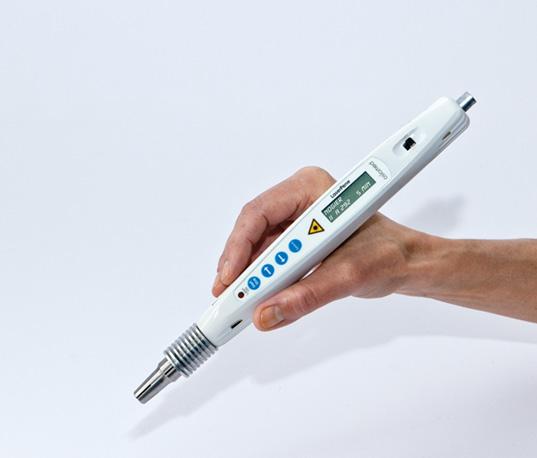
• Use of laser devices with frequency modulation (resonance frequencies), e.g., the LaserPen
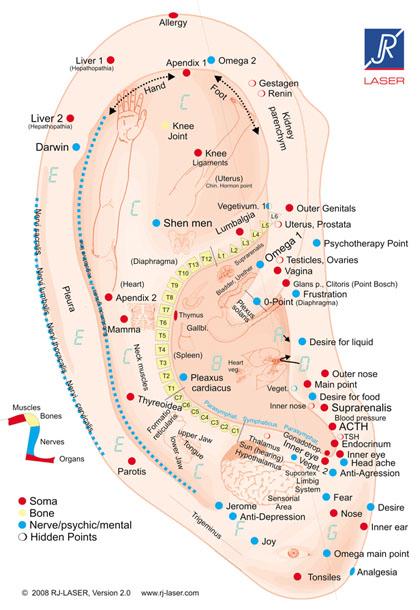
The ear map
In addition to the modulation frequencies, correct point localization is essential for successful ear acupuncture. Ear charts show the precise location of ear points, organs, and frequency zones. Various ear charts are available (the image shows the RJ-LASER ear chart).
Ear acupuncture or auriculomedicine can be divided into four directions and partly different ear maps: Chinese ear acupuncture, French ear acupuncture, German ear acupuncture with a French basis and mixed forms (e.g. HP Michael Noak).
German ear acupuncture is based on the concept of the body as a resonating, oscillating frequency system. It is important to use the correct laser with pre-programmed modulation.
The most comprehensive ear chart currently available was created by Dr. Bahr and is available through Blum Akupunkturbedarf (www.blum-akupunktur.de). As well through the Canadian Institute of Auricular Medicine (CIAM).
CIAM is the only professional development provider endorsed by the Deutsche Akademie für Akupunktur (DAA). It presents a comprehensive Auricular Medicine curriculum aligned with the EATCM, ÖGKA and DAA, based on the work of Nogier, Bahr and other leading physicians working in the field of Auricular Medicine today.
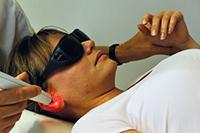
RAC pulse detection, pulse diagnosis with Laser
RAC pulse testing (Reflex Auriculo-Cardial) is an alternative medicine diagnostic method primarily used in auricular acupuncture (auriculomedicine). It was discovered in the 1950s by the French physician Dr. Paul Nogier (1908-1996) and is also known as the Nogier reflex or VAS (Vascular Autonomic Signal). Dr. Frank Bahr (1944-2025) significantly expanded RAC pulse diagnosis. Among other things, the polarizing filters used by Nogier were replaced by Laserfrequenzen 1-7 developed by Bahr. These frequencies must be pre-programmed in the laser.
Core Concept and Function
• The Reflex: When an active acupuncture point is stimulated (e.g., by pressure, needles, or laser frequencies), the body reacts with a brief change in pulse quality (RAC).
• Perception: A trained therapist palpates the pulse at the radial artery in the wrist. The RAC usually manifests as a brief increase in amplitude or a sensation as if the pulse wave is impacting the palpating finger.
• Physiology: It is assumed to be a sympathetic-autonomic response in which vascular tone changes briefly.
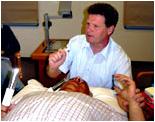
Applications in ear acupuncture, RAC pulse diagnosis
In practice, therapists use RAC testing for various purposes:
• Point location: Locating acupuncture points on the ear that require treatment.
• Focus of interference diagnostics: Identifying blocking factors such as scars, chronic inflammation, or toxic burdens.
• Material testing: Testing the compatibility of medications, foods, or dental materials.
Scientific classification: RAC pulse palpation or RAC pulse diagnosis is considered a speculative concept and is not recognized in evidence-based conventional medicine.
Information on the specific procedure for pulse palpation, laser therapy, or training opportunities in auriculomedicine can be found through the German Academy for Acupuncture (DAA e.V.).
https://canadianauricular.ca (CIAM)

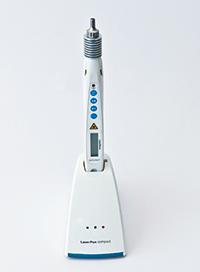
Laser therapy as a modern special form of ear acupuncture
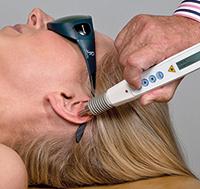
Laser irradiation in ear acupuncture (also called laser acupuncture) is a modern, painless alternative to traditional needle acupuncture. A focused beam of light (usually a low-level laser) is directed at the acupuncture points on the ear to trigger a therapeutic stimulus. In modern ear acupuncture (Nogier; Bahr), the laser is used at specific frequencies (resonance frequencies).
Advantages of Laser Therapy
• Painless: Since no needles penetrate the skin, this method is ideal for children, people with a low pain threshold, or patients with a fear of needles.
• Infection Protection: No puncture wounds are created, eliminating the risk of inflammation or infection of the ear.
• Additional Biostimulation: The laser light is converted into heat in the tissue and directly influences cell metabolism. This can accelerate healing processes and strengthen the immune system.
• Precision & Frequencies: Modern laser devices such as the LaserPen or Physiolaser allow for working with different frequencies (e.g., pulsed) to selectively stimulate or soothe specific points without having to move the needle. This is ideally achieved using meridian frequencies according to Dr. Reininger, frequencies according to Dr. Nogier, Dr. Bahr, and others.

Important applications of the laser
Laser ear acupuncture, or laser therapy, is used for the entire spectrum of classical acupuncture, but shows particular strengths in the following areas:
• Pain therapy: For pain relief in cases of migraines or back pain; studies even suggest that it can help erase pain memory.
• Psychological disorders: Treatment of stress, sleep disorders, exam anxiety, and tinnitus.
• Addiction treatment & metabolism: Support for smoking cessation or weight loss.
• Skin & wound healing: Promoting regeneration in cases of herpes, scars (keloids), or inflammation in the ear, nose, and throat area.
Procedure and duration: Depending on the number of points and the laser type, power, and wavelength (e.g., LaserPen, Physiolaser), a session usually lasts only a few seconds per point. Since no permanent needles are used, the risk of inflammation lasting several days is eliminated. However, for a lasting effect, the treatment usually needs to be repeated in several sessions (approximately 3 to 10). Informations about the LaserPen and Physiolaser.
Important Resonance Frequencies, Nogier Frequencies
The NOGIER frequencies must be preprogrammed into the laser device. They have been in use for more than 40 years and are available in both potentized and non-potentized forms, with both octaves having the same indication. The Nogier frequencies are represented by letters: A´ B´ C´ D´ E´ F´ G´
A’/292 Hz Acute conditions, cellular level, inflammation, tumors, body orifices, consent point
B’/584 Hz Chronic conditions, metabolism, cellular nutrition, abdomen, sedation point
C’/1168 Hz Circulation, energy transport, musculoskeletal system Bones, muscles, joints, extremities, tonification point
D’/2336 Hz Mental disorders, exhaustion, pain Commissures, alarm points
E’/4672 Hz Nervous disorders/pain, neuralgia, neuritis, spinal cord, nerves, starting points
F’/9344 Hz Depression, psychological symptoms/causes, facial bone reconstruction, subcortex, emotions, end points
G’/18688 Hz Intellectual/psychosomatic disorders, prefrontal brain region, forehead, source points

Important Resonance Frequencies, Bahr Frequencies
There are different frequency series such as BAHR 1, BAHR 2, Bahr Movement, Chakras, etc. The frequencies must be pre-programmed in the laser devices and can be controlled via RAC. BAHR 1 is displayed as a number on the screen: 1, 2, 3, 4, 5, 6, 7
1/599.5 Hz Disturbance in the maintenance of acquired energy, disturbance in the maintenance of one’s own energy resources, cause of the disease, affinity to the sympathetic nervous system, deep tissue layer
2/1199 Hz Energy transfer, neural energy and distribution function, hormonal and nervous systems, affinity for the parasympathetic nervous system, middle tissue layer
3/2398 Hz Boundary and tangential zone between humans and the environment, biotic points, Omega-Ren channel points, superficial tissue layer, Omega-KG point
4/4796 Hz Omega-LG point
5/9592 Hz Special frequency for oscillation, Over-Omega
6/19184 Hz Axial frequency of the left ear and ZP right
7/38368 Hz Axial frequency of the right ear and ZP left